
Amrit Nivesh | ARN 113567 | AMFI-registered Mutual Fund Distributor
On 7 October 2026 the Reserve Bank of India’s Monetary Policy Committee raised the repo rate by 0.25 percentage points, from 5.25% to 5.50%. All six members voted for the increase. The committee also changed its stance from neutral to what it calls “calibrated tightening”.
What the RBI decided
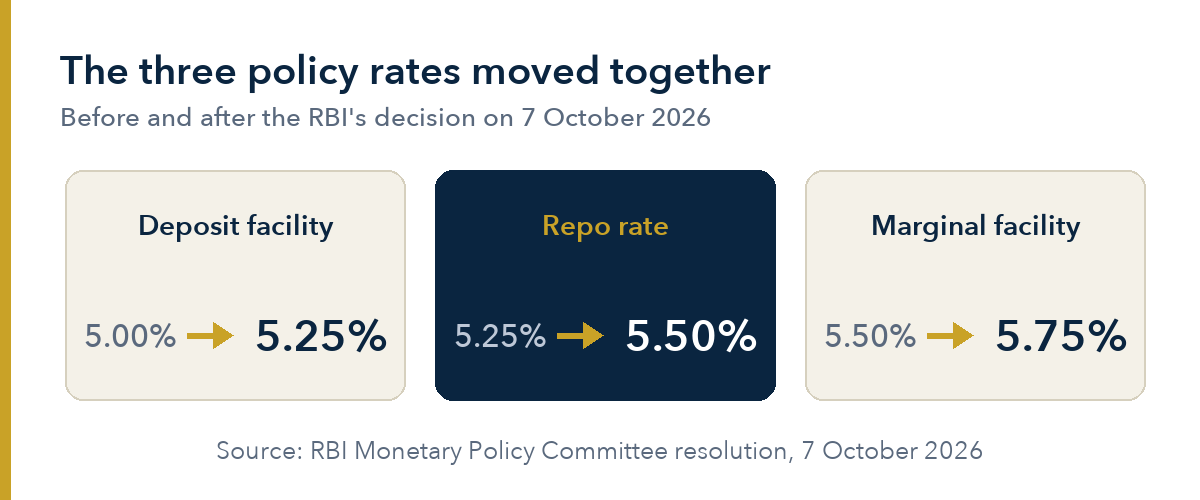
The repo rate is the rate at which the RBI lends money to banks for short periods. The two rates on either side of it, the standing deposit facility rate and the marginal standing facility rate, moved up by the same 0.25 points.
The change of stance matters as much as the rate. The RBI says it means rate cuts are off the table for now, and that its next move can only be a rise or a pause, depending on how prices and growth behave. Four of the six members backed the new stance. Two would have kept it neutral.
Why it raised rates
Prices. Retail inflation (CPI) rose to 4.8% in August from 4.5% in July. Food and fuel drove most of it, but the RBI says price rises are spreading to other items as well. It points to a weak south-west monsoon, El Niño, and high crude oil prices while the conflict in West Asia continues.
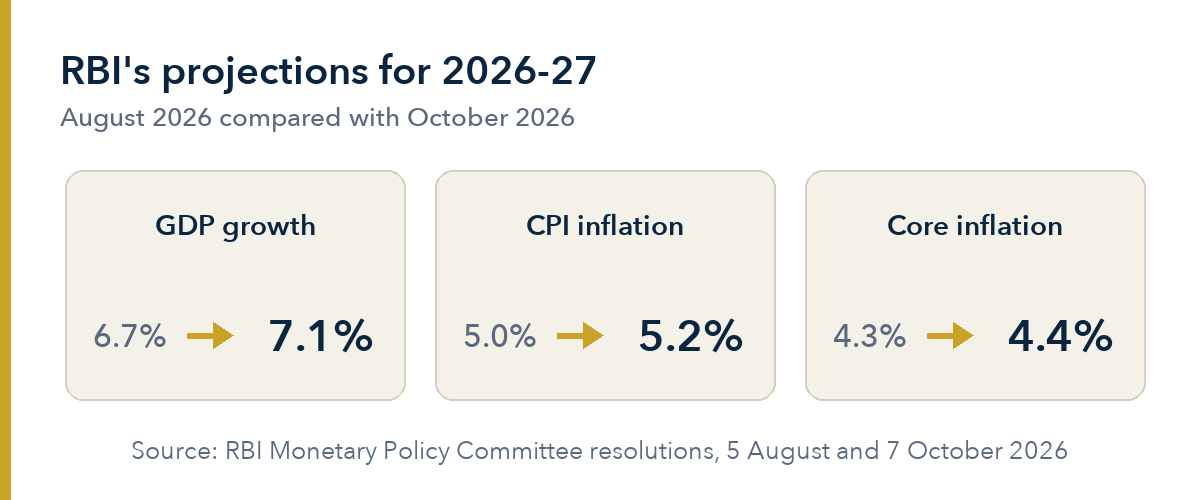
The economy itself is growing well. GDP grew 7.8% in April to June, faster than the RBI expected, and it now projects 7.1% growth for the year. The committee’s view is that with growth this strong and inflation expected to average close to 5.8% over the next three quarters, it had to act now.
How a repo rate rise reaches you
When banks pay more to borrow, they tend to pass some of that on. It does not happen all at once, and every loan and deposit has its own terms.
- Loans. Most floating-rate home loans taken since October 2019 are linked to an outside benchmark, usually the repo rate. Their interest rate can rise at the next reset date in the loan agreement. Your bank will tell you whether the EMI or the tenure changes.
- Fixed deposits. Banks may raise the rates they offer on new deposits. Deposits you already hold stay at the rate you booked.
- Debt mutual funds. Bond prices move the opposite way to interest rates. When rates go up, the bonds a fund already holds are worth a little less, so its NAV can dip. Funds holding longer-term bonds feel this more than those holding short-term ones. New money the fund invests buys bonds at the higher rates.
- Equity mutual funds. Share prices react to interest rates along with many other things. There is no fixed rule for how they move after a rate decision.
What happens next
The minutes of this meeting, with each member’s reasoning, come out on 21 October. The committee meets next from 2 to 4 December 2026.
If you have a home loan, a SIP or money in debt funds and want to talk through what this change means for you, send me a message and I will call you back.